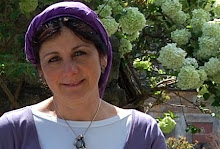
Scandar Copti aggravated plenty of Israeli Jews and even some Israeli Arabs by his remarks about not representing Israel when his film was nominated for an Oscar.
He said:
"I am a citizen of Israel but do not represent it. I cannot represent a country that does not
represent me."
My first response to Copti's remarks was the same as that of many Israelis – Funny that it didn't stop you from taking all that lovely Israeli money to make the film, hun. But on second thoughts I've decided that it's fine with me that Copti feels that way.
The money, by the way, is a BIG deal in Israel. Israel makes maybe six feature films a year, sometime three, sometimes two because arts funding is so dire over here. (As opposed to the US, where there is fabulous funding for movies, but no national health service).
Hundreds of filmmakers, scriptwriters and producers submit their projects every year, without success. Even successful directors, who have won prizes and made excellent films in the past, have a great deal of difficulty getting a second project funded.
"Ajami", funded by Israeli government money, meaning funded by income tax deducted from my own salary, was undoubtedly awarded the necessary foundation grants because of its outstanding script and because of the years of painstaking research that went into its creation. However, since none of these decisions are ever apolitical, we can assume that "Ajami" also got a million dollars of Israeli tax payers' money because Copti's voice, indeed the city of Jaffa's voice, was a voice that the Israel Film Fund wanted to be heard. The Israeli film establishment is super-left, and the last three Israeli films to be nominated for an Oscar are highly critical of Israel, of course. We have never, ever, seen a feature film about an Israeli Jewish family reeling from the impact of injuries sustained by a parent or child in a terrorist attack, even though civilian Israelis have been shot, stabbed and blown up since 1948. Strange that.
But for our purposes, none of this is relevant. Copti is entitled to feel that he doesn't represent Israel, and that it doesn't him. His feelings, living in a minority culture, are perfectly normal. If I look back at my upbringing in the UK, I see that I never felt that I belonged. A child of Britain with a British passport, I didn't feel that I represented Britain or that it represented me. The British government paid for my education, my health, my dental treatment and my university degree. Such a "chutzpa" for me to feel I didn't belong!
Why didn't I? Two main reasons:
One – I worked quite hard at not belonging. I practiced a religion not practiced by the British majority (my choice), I was passionately and idealistically devoted to Israel’s growth and development, not Britain's, (my choice), and as a result I felt somewhat separated from many normal aspects of ordinary British life (my choice).
Two – Britain made no attempt whatsoever to make me feel that I belonged. In the Britain of the 1970's, Judaism, the experience of Jews in society, their beliefs and practices, and their contribution to British Life, were barely acknowledged or discussed. In the late seventies and early eighties the Israel-hatred began in the British press, and every morning before breakfast I would be reading Robert Fiske's perspective on the Lebanon War. It was enough to make any Jew pack their bags and leave. Then there was the Holocaust. Don't be fooled by all the Holocaust stuff going on today. For all the years I was growing up, the Holocaust was considered to be a boring, let's-put-it-behind us topic, and was never mentioned. To the point that, on my first Holocaust Day in Israel, watching every single person in the street come to a dead halt during the siren, I wept like a child. Not for the Holocaust itself, but for the recognition of the Holocaust.
Minorities often feel they do not belong to the country where they live. Often but not always. The United States is a spectacular exception to this rule. Many orthodox Jews feel totally American, as do many Hispanics, African-Americans and Muslim Americans. But this is not the rule. Usually, minorities feel like minorities, and Christian Arabs living in a predominantly Jewish country are no exception.
Now we could say that Britain has failed its Jewish minority in many ways. So many of us felt we did not belong, and left for Israel, the US or Australia. Why was it so easy for us to go? Our American counterparts had much greater difficulty in leaving the country of their birth. We can surmise that the comfort level of a country's minorities, their sense of belonging in that country is probably a test of how well grounded the democratic values in that country are. We can certainly suggest that the UK has failed its Jewish minority in some ways. The Chief Rabbi sits in the House of Lords on the one hand. And on the other, thousands of British Jews do not feel wholeheartedly British and do not feel a sense of belonging. Especially those Jews who actively identify with a Jewish community and who live their lives Jewishly, in some way or other.
Similarly, if Scandar was born and raised in Israel, and is an Israeli citizen, but does not feel he represents Israel or that she represents him, then we can suggest that Israel has failed its Palestinian Christian minority.
But the other side of the argument also applies. Scandar Copti has probably worked quite hard at his Palestinian-Christian identity in Palestinian-Christian Jaffa in the predominantly Jewish state of Israel, just as in the nineteen seventies I worked hard at being an orthodox Jewish Zionist in a predominantly Christian UK. The question is whether Copti ever wanted to feel Israeli or be Israeli, and whether if he did, he was actively prevented from doing so. He certainly got $1,000,000 to make his film, in a circumstance where hundreds of Jewish Israeli directors were turned away.
We all make choices about how much we will melt into the majority, and how much we will keep ourselves apart, and what sacrifices must be made in each case. For myself, I got tired of being in the minority, of being different, of not being part of the mainstream of anything. I did the multi-cultural bit, living in an apartment with a Moslem, a Christian and a Hindu at university, and it was wonderful. I loved those women and I still love them today. But in the end, it was too hard for me. I wanted and needed belonging, and I moved to Israel because it felt normal to be Jewish there. It did not feel normal in the UK. You could say that this is a limitation of my personality and you could be right. It is almost certainly a limitation of the UK. But all I can say is this: I've done multi-cultural and I've done belonging. Belonging's better.
However, belonging brings with it a new kind of responsibility- I'm part of the majority culture now. And that means that I have to take care of my minorities. I have to be noticing them and listening to them. I have to be working towards a certain level of comfort for them. It's probable that I can never give them belonging. Perhaps Palestinian Christians would only feel a sense of total belonging in a Palestinian Christian country. But as an Israeli citizen I need at least to be concerned about their rights, their education, and their standard of living.
As for Scandar, he too has some choices to make. He can stay in Jaffa, feeling a relative sense of belonging in the Palestinian Christian community in which he lives. He can be aggravated for the rest of his life, if he so chooses, by the fact that the Israeli establishment is not sensitive to the needs of his community. He can work hard to right that as much as he can. He can campaign for Jaffa residents to be better treated and better understood. Many Jews in the UK have made this choice. Or, he could move to a country where Palestinian Christians feel much more at home. Where is that I wonder? It would have been Lebanon once, but the influence of Hezbollah and it's backer, Syria, has made that country unrecognizable to many Arab Christians. And I have the teeniest inkling in my stomach that when a PalestinianMuslimState comes into being, Palestinian Christians will not find much belonging there either.
Meanwhile, we can celebrate that Copti was given Israeli money to make his film. And if it's important to us that Copti will feel, next time around, that he "represents" Israel, then we will all have to work a lot harder at noticing, and feeling, the lives of Palestinian Christians in our country. Conversely, if Copti himself wants to represent Israel and it to represent him, then he also has some work to do. He will need to connect with our government, promote dialogue, and use his Israeli citizenship and high profile to achieve these things. In a few years he could run for the Knesset, and try and work wonders for the city of Jaffa from there. The question is whether or not he wants to. It's up to us, and it's up to him.
The Academy Awards are taking place right now. I mean Right Now in this Space-Time Continuum. I know, because I heard some prizes being given on the radio this morning. James Cameron did not get Best Director nor did Avatar get Best Film. Katie Bigelow got best film for “Hurt Locker”, and I for one am delighted that a woman director finally got recognized in Hollywood.
But I kind of hoped Avatar would win.
It’s a good thing that when I went to see Avatar a couple of weeks ago, I had heard a lot of scathing reviews. That way, I had no expectations. A friend of mine, a fellow graduate from film school, told me that Avatar actually made her angry. “ Three hours of techno 3-D garbage and not a single redeeming thing about the script”, she snapped. Hmm.
We people who went to film school can be pretty snotty about films. When we go to the cinema we tend to look for things like, er, content. So I wasn’t actually considering going to see Avatar. Or if I went, I would go in disguise so none of my film school friends could see me there.
The 3-D thing was a particular turn-off. I mean duh, the whole point of cinema is that it’s a two dimensional medium. The script, the directing, the acting and the cinematography have to be so good that viewers are completely sucked into this 2-D world. 2-D is the language of cinema and it’s a language that viewing audiences first began to learn about 200 years ago, when the Lumiere brothers traveled the world showing the first moving pictures on screen. When those audiences in the 1820’s first saw a train coming towards them on film, they ran out of the cinema thinking that it was going to burst through the screen and into the auditorium.
Nowadays, we’ve all internalized the film language of 2-D. We don’t run out of the cinema because that creature in Alien 2 might sneak around the back of the screen and hide in the toilets. And we certainly don’t need stupid 3-D glasses to go see a film. Or perhaps we do. Perhaps we did all sit through Sophie’s Choice and Godfather saying: “Man, this film would have been so much better in 3-D”.
Probably my prejudice against 3-D is that I see it as part of the overall process of the dumbing down of cinema. So much of what we see coming out of Hollywood is lowest common denominator stuff, the kind of thing that 14 years olds enjoy. Not that I’m knocking 14 year olds. I respect them totally. It’s just that their minds and souls are not, er, fully developed.
My son, Yonatan, who was once 14 but is now Thank G-d 22, has no patience with my film school snobbery. “C’mon Mom.” he says. “You’re going to judge Avatar without even seeing it? You know better than that.”
I squirm uncomfortably, because I always taught the kids never to judge a film without seeing it. That sounds pretty obvious, but debates often rage over films that the people debating them have never seen. Life is Beautiful and Waltz with Bashir come to mind. That’s why I made myself go and see “Titanic” even when something in my bones told me it was going to be terrible. And it was. It was truly terrible. Hail me. The only human on the planet who thinks that Titanic was lowest-common-denominator teenage garbage. Not the ship, that was for adults, but the movie.
So I’m sitting in the movie theater with Aryeh before Avatar begins, dressed in a penguin outfit so none of my film school friends will see me. You can tell by the set of my shoulders that I’m not going to enjoy this film. Certainly not wearing these ridiculous glasses.
Well – here’s my take on Avatar. It’s absolutely wonderful. Mostly because the sheer visual beauty of it is breathtaking. And yes – the 3D is sensational. It’s perfect for this genre. It’s true that you wouldn’t want to see Cabaret or The English Patient in 3-D, but 3-D would have been great for Star Wars, or The Maitrix.
It’s not the 3-D that won me over though. It’s the sheer genius level of human creativity that went into it. Avatar is about Other Beings on a faraway planet. The planet has flora and fauna which are completely different to ours. Along come the human invaders, who for some reason all look like George Bush and all have a southern accent. They say things like: “We have to fight terror with terror”. The humans exploit and destroy and uproot in order to get at a valuable mineral which is located under the tree village where the natives live. Bad, bad humans. Good, good natives. Who hates the human race? I do. Because They’re Blindly Destroying Their Own Planet Without Thinking About The Future.
Okay, so the script isn’t super original. America hates itself over the invasion of Iraq, and once you get over that, (which Aryeh couldn’t, for the entire film), you can settle down and enjoy the movie. And like I said, it’s the sheer visual beauty of it that’s breathtaking. It’s as if the director and animators are inviting you to take a magic carpet ride, and you do. You’re like a child watching animaton for the first time, and you’re filled with the wonder of it.
Every single beautiful piece of art and originality I saw in this film made me think about the ordinary humans sitting at their computers who just made the whole thing up. It's my opinion that that’s harder to do in cinema than in written literature, because every single idea you have has to be brought to full visual reality. In Avatar, all the gorgeous hi tech science fiction sequences about the technical world we might one day live in, and all the birds and flowers and monsters and trees in the movie, so lovingly crafted, are just people’s imagination. We wouldn't be able to see into their imagination unless they were capable of carving out into reality, those hazy shapes and colors and movements.
The script does have its predictable moments, and I enjoy driving Aryeh crazy by guessing what the end of each sentence in the dialogue will be. When the hero kneels by the Mother Nature Tree, he prays for victory over the invading human army. I turn to Aryeh and say: “…Tree, I’m gonna need your help.” The hero sighs and says: “Tree, I’m gonna need your help”. Aryeh has usually moved to a different row in the movie theater by the end of any film that we see together.
Here’s what’s the most moving about Avatar. If you forget the whole Iraq thing, it’s a love story, and the love in it is completely convincing. I’m not giving away the end of the movie, but it says some powerful things about how we love the soul of a person (or alien).
So please, do go and see Avatar. If you see people dressed up in various disguises, it’ll be my friends from film school. Just pretend you haven’t seen them.
PS I don’t really want to go and see “Hurt Locker”, which will be more Iraq breast- beating. But I can already hear Yonatan frowning down the phone. “Mom?” he’ll ask. “Are you really going to judge “Hurt Locker” before you’ve even seen it?”
People who don't keep kosher feel, and view the world differently than people who do. Now don't get defensive. I'm not using words like "better" or "worse". I'm using "different".
I've just got back from a few days in the UK, where I presented two Ma'aleh events, one in Hendon with the Emunah organization and one at Birmingham University Hillel.
On Friday morning, my Mum took me to the new VanGogh exhibition at the Royal Academy. Entering this beautiful historic building for an exhibition full of priceless art, I take note that there's no gum-chewing security person at the entrance checking my bag. Strange that. The UK is different in this way than, say, Israel. Must be because they've never had terrorism over there.
Anyway, we walk around the different rooms, taking in the sumptuous pictures, which are accompanied by exhibits of the actual letters the artist wrote to his brother and sister about his work. There's a lot of new stuff there I've never seen before, and it's mostly gorgeous. He did love to use a spot of colour, that Vincent.
One picture attracts my attention - it's a painting of 2 huge orangey brown crabs, looking very undead. In fact, they look as if they're waving their huge pincers around and are about to leap out of the canvas to bite us all, two hundred years after VG painted them. Says something about his gift, doesn't it?
Still, I'm intrigued by this - what an earth made VG choose them as a subject? Not the most aesthetic of creatures, or the most aesthetic of paintings. I retreat backwards to see if I can glean some insights from the other, more knowledgeable, members of the public. I notice two young women standing respectfully back with a look of awe as they contemplate the crabs.
"Crabs... look at that!" says one woman to another, and they stare at the picture.
After a pause, the 2nd woman replies "Makes you hungry, doesn't it?"
We Kosher people you see, that would not be our first reaction to a picture of two crabs. Would it be fair to say that the dietary temptations for you non Kosher people, are a teensy bit different from ours? Take prawns for example. I mean those
segmented fat pink worms that you guys put in cocktails sometimes. Your mouths are watering, right?
That's exactly my point.
PS. VG died before he could paint his next project, a plate of chopped liver.
Today I took the bus from Jaffa Road to the Central Bus Station.
I haven't taken a bus in a long time, but Aryeh needed the car.
Yes. Aryeh and I live, operate and work in the world with one car. As do most of our friends. The great thing about having one car is that you develop fantastic powers of negotiation. For the past 5 years, since my son Yonatan got his license, the 3 of us have sat around the dining room table at night negotiating over Who Gets The Car. We each have to say: "I need the car the because..."
Anyway, here I am boarding the number 20 bus on the Jaffa Road in downtown Jerusalem. It's very crowded and I struggle to get to the back where I can hang on to a yellow pole and sway back and forth in unison with all the other passengers. Out of habit, I scan the face, body language and clothing of every single person standing or sitting in my vicinity. Why? Because that's what I learned to do for four years during the Intifada of 2000-2004, when I was commuting back and forth to film school, and was afraid of getting blown up on the bus every day.
I was very, very lucky not to get blown up, but other people were not so lucky. A lot of young people got blown up, and a lot of old people got blown up, because they use the buses the most. Lots of school children got blown up, because that's who the buses are packed with at rush hour every morning. One schoolgirl was on her way to a swimming competition, because she was a swimming champion. After the bomb, they were only able to identify the body by analyzing the shreds of fabric from her swimsuit.
In those days I would get on the 20 or the 6 or the 21 outside Jerusalem Central Bus Station, and I would try and work out which seat would be least likely to get me killed. I couldn't sit at the front because some bombers would panic as soon as they boarded and detonate right away. I couldn't go to the middle of the bus because so many bombers would the choose the middle as the place to detonate, causing maximum damage to the front and back of the bus.
At night on the news, there would always be footage of the latest blown up bus to look at. I would try and calculate from the wreckage, which seats had been the safest and which had been the deadliest, on that bus.
Usually I would make my way to the back of the bus, figuring that most bombers would lose their cool and detonate before reaching the back. And I would always scrutinize my fellow passengers very, very carefully, at the same time, of course, that they were scrutinizing me. If I saw any dark skinned young man travelling alone with a backpack, I'd get off the bus and just walk the rest of the way. And that would happen say, five times a week.
Today I scanned all the faces on the bus and I felt relatively safe.
Because we got them.
The bomb-makers and the masterminds and the organizers and all the eighteen-year-olds who couldn't wait to get recruited. We got them all, pretty well. We took them on, and we dismantled their networks,we smashed their bomb factories, we listened to their phone calls and blocked their bank accounts, and when any of their top brass forgot to be vigilant, we assassinated the hell out of them.
As well as doing all of this, there was the small and simple matter of involving our children in this fight. All our little boys, the ones who had been playing with meccano and lego and playmobile on the living room floor. The ones who loved reading Tintin and Asterix or the Israeli equivalent, and who gobbled their Frosties for breakfast every morning before getting the bus to school. All our beautiful boys - the ones who were on Ritalin and the ones who weren't, the ones who loved football and the ones who were too nerdy for sports. The ones who wore kipppot and tzitzit and the ones who didn't. We waited till they turned eighteen and then we put them in uniform and trained them to use weapons and taught them to speak Arabic, and they went into every one of those viper's nest towns like Jenin and Ramallah and Nablus, usually during the night, and they arrested every single person hiding a weapon or in possession of explosives. When Jewish kids outside of Israel were at university studying law or medicine or engineering, our children were in those towns. Every night.
As for the big shots, the cowards who were recruiting teens to do their terrorist work for them but who didn't get their hands dirty themselves, the ones who travelled around Jordan and Syria and Egypt and who hid in safe houses and got themselves new identities - we got them too. In Gaza and in Tulkarm and possibly even in Dubai. They will never, ever be safe from us, and we will get every last one of them.
We don't know for sure if Mahmoud Mabhouh was assassinated by Israel, but as an Israeli I sure as hell hope so. He was a key player in smuggling weapons into Gaza from Iran. Weapons to fire on our civilian populations. Special long range rockets for hitting Tel Aviv. Guns and mortars for terror attacks.
So if any of you are feeling outraged about the Dubai assassination, go ahead, you're entitled.
You probably weren't using the buses here between 2000 and 2004.
It’s Sunday in Los Angeles – Superbowl Sunday. Superbowl Sunday is a big day for the Los Angeles Jewish Community. It’s up there with Yom Kippur, or Seder Night. How do I know?Because I'm here with a delegation from the Ma’aleh Film School for 10 days of screenings and events, and we haven't been able to book a single screening on Superbowl Sunday.There is no synagogue, JCC, campus, Jewish organization or private home that would consider holding an event on this holy day.That’s because every single member of the Los Angeles Jewish Community, from age 7 to 77, male or female, Ashkenazi or Sephardi, orthodox or reform, is mad about American football. And that means that nothing, absolutely nothing, can be scheduled on Superbowl Sunday.
I’m trying to think if we have a parallel in Israel?I don’t think so.Let’s say the Los Angeles ballet company were coming to Tel Aviv and they wanted to schedule a glitzy performance on Yom Kippur.It would be no problem. They would get 1,500 people. And if all the theaters were closed, someone in Herzliya would do it at their private home.
What I’m trying to say is, there isn’t a single event in the Israeli calendar where you could get all Israelis to agree on the importance of that once event. Certainly not a sporting event. If the event had something to do with Humus, (the chickpea dip, not the terrorist organization) you might get a consensus. Humus is the great Unifying Factor in Israel. I’m not kidding. Arabs eat it (they invented it). Ultra-orthodox Jews eat it. Trendy Tel Aviv lefties eat it, and Settlers eat it.The Green family eats it on a Friday night with fresh whole wheat challah, so there is never any room for soup. There might be some exceptions though.There’s a Russian Orthodox monastery right next to Ma’aleh and I’m not sure the nuns there eat Humus. Those nuns look a bit anemic to me. I’ll make sure to send around a tub or two.
I do remember one time when practically every Israeli in the country was watching the same thing on TV, and that was when Ilan Ramon, the Israeli Astronaut, was broadcasting from the inside of the space shuttle. I get such a pain in my heart when I even think about Ilan, who died in the space shuttle explosion, and his gorgeous beautiful son, who was killed piloting an IAF plane only a few months ago.I hope G-dash-D is holding them both really tight up there. I hope He’s hugging them for all the Israelis who want to hug them but can’t.
I take it back when I say that all of Israel was watching Ilan’s broadcast. The ultra-orthodox were probably not watching. I think they were out demonstrating in Tel Aviv, against the Los Angeles ballet company performing on YomKippur.
THE PICO KOSHER DELI AND OTHERSPIRITUAL MATTERS
It’s Superbowl Sunday and my colleagues, Neta and Pazit, have gone to Disneyland for the day. I’m feeling SLIGHTLY better, after two days on antibiotics. I've had strep throat and a high fever, (that's right, on a business trip), so I didn't go.
So here I am alone in a hotel room. My knees are improving, they’re now chopped liver consistency and I can sort of stand up. But with the sore throat and feeling like death and all, I’ve had nothing to eat for four days.
I’m sitting on my bed in the hotel room feeling a little low, because I just spoke to Pazit, and she and Neta are about to go on the “It’s a Small World” ride which I haven’t seen for thirty years. All seventy two TV channels are showing ads for the Superbowl, or past Superbowls, or men in suits predicting what will happen at the Superbowl, or crowds of laughing and delighted people in New Orleans laughing and being delighted about the upcoming Superbowl. (The Saints did win by the way.)
I’m sitting on the bed thinking:
“What would I love to eat right now, ifI had to force it down just to get some nutrition?”
And I realize there’s only one way to find out.
Ten minutes later I’m walking on my chopped liver knees down Pico Boulevard, which is around the corner from the hotel, and where all the kosher eateries are. I call Tali our events organizer, whose superb brain we are using to produce the film festival.
“Tali,” I say “I need a corned beef sandwich, for medical reasons. Where do I go?”
Without missing a beat, Tali says:
“You need the Pico Kosher Deli”.
Pico Kosher Deli is awesome, there is no other way to describe it.It is a dream of a deli, and the people who work there only speak in Hollywood movie language. They call out things like:
“Ira, that’s one corned beef on rye with pickles and coleslaw to go.”
The corned beef looks like it’s from a movie and so does the rye bread. Even the coleslaw looks like it was scripted. The coleslaw should have a sign next to it saying:
INTERIOR. DAY. COLESLAW.
All I can say is, if you are ever having doubts about your Judaism, you need to visit the Pico Kosher Deli. Come to think of it, I don’t think it’s a co-incidence that the Aish HaTorah building is just up the road. Those Aishpeople know what they’re doing. First, they spend six months putting people back in touch with their Jewish roots. Then they send them down the road for a corned beef sandwich. After those two experiences, no one has any problem believing in G-dash-D.
So. I’m back in my hotel room sitting on the bed, watching the only channel I can find that doesn’t have the Superbowl on it.It’s the health channel, showing hour after hourof pregnant women giving birth to premature babies who almost die but don’t.
I unwrap the corned beef sandwich, which is about six inches high, the coleslaw is glistening in its little plastic tub, two elegant long pickles are laid out on the greaseproof paper, and I’m sipping on a diet coke. On TV, premature twin girls named Shauna and Shannon have just been born, and they’re going to be okay.